
P3 – Ground-based measurements
The overarching objective of this project is the determination and quantification of the 3d cloud radiative effect of various cloud types, including homogeneous and broken clouds, by empirical studies with ground-based measurement techniques. Thereby, we will make use of the suite of instruments deployed at the Meteorological Observatory Lindenberg – Richard Aßmann-Observatory. At the observatory two cloud radars are run, one at a frequency of 35 GHz, the other with a frequency of 94 GHz. Furthermore, there are several microwave radiometers, ceilometers, lidars, photometers (solar and lunar mode), spectroradiometers and a station of the Baseline Surface Radiation Network (BSRN). This station consists of a pyrheliometer for measurements of the direct radiation, a pyranometer to access the global solar radiation as well as the diffuse radiation and pyrgeometers to derive the longwave radiation. Moreover, there are four daily launches of radiosondes. Beyond this, radiosondes equipped with a four-component radiometer can be launched. With this radiosonde system, called Irradiation SOunding LinDEnberg (ISOLDE), profiles of incoming and outgoing short- and longwave radiative fluxes and cloud radiative effect are derived.
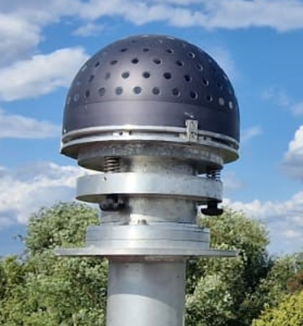
Additionally, we will benefit from measurements of the Advanced Multidirectional Spectroradiometer (AMUDIS), which is presently unique worldwide. It measures the sky radiance in the wavelength range from 280 nm – 1700 nm in more than 140 different directions simultaneously. The simultaneous measurements are a crucial advantage to comparable scanning systems because thus, the continuous changes in radiation quantities due to changes in cloud properties can be properly accessed. The data retrieved with AMUDIS will be connected with images taken by a Hemispherical Sky Imager.
Hence, Project 3 aims to establish the long-term “ground-truth” for the research unit programme as it provides co-located measurements of vertically and horizontally resolved cloud properties, as well as solar and thermal spectrally resolved irradiances and radiances at the surface and in the vertical. Together with project 4, the radiative fluxes at the top of atmosphere are available so that Project 3 and 4 can compare and evaluate their cloud radiative effect calculations and closure results to this data set. The outcomes of this project will also serve for cloud model evaluation in Project 1. Here, the dependence on model resolution and physical complexity will be investigated. Furthermore, the established ground-truth will serve the regime-dependent cloud-radiation correlation evaluation in Project 2.
Principal Investigators:
- Christine Knist, German Weather Service
- Gunther Seckmeyer, Leibniz University Hanover
- Stefan Wacker, German Weather Service
Project Scientists:
- Ardhra Sedhu-Madhavan, German Weather Service
- Henrik Wiegand, Leibniz University Hanover
Research Questions
The primary research questions of this project are:
- What are the correlations between the observed macro- and microphysical cloud properties and the observed broadband and spectral irradiance?
- What is the magnitude of the observed cloud radiative effect for different cloud scenes and how sensitive is it to most relevant atmospheric parameters?
- How reliable are the remote sensing cloud properties retrievals and how can they further be improved using the closure results and improved 3d models?
- How is spectral radiance correlated with various cloud types?
- Can the statistical variability of measured spectral radiance be reproduced by 3d-models?
Work Programme
In order to address these research questions, the following work programme ist anticipated.
Calculations of correlations between observed irradiances and cloud properties
The work necessary for this purpose is to calculate empirical surface cloud-radiation correlations directly from long-term measurements of collocated cloud properties and radiative fluxes. Therefore, the Lindenberg dataset is used from which a quality-controlled long-term series up to 30 years of radiative fluxes and various cloud properties can be compiled. The cloud cover and the cloud properties of the geometrical thickness, the cloud base height, the cloud temperature and the liquid water path are derived from various remote sensors such as the cloud radar, the ceilometer, the microwave radiometer and a thermal hemispherical sky imagery. In addition, the Cloudnet dataset derived for a period of about 15 years at the Lindenberg site provide the cloud categorization into liquid, ice and mixed phase clouds as well as their vertical and temporal, and thus horizontal, variability. The broadband shortwave and longwave fluxes are obtained from the BSRN station at Lindenberg. This station was established in 1994 and provides long-term high-quality observations of incoming radiation and all three individual solar components (global, direct, diffuse). The broadband observations are complemented by spectroscopic measurements from the UV into the near-infrared wavelength range. With the combined data set of cloud and radiation observations cloud-radiation correlations can be inferred for the various cloud categories such as liquid, ice and mixed phase clouds. An important aspect in this context is to obtain not only correlations but also to obtain the natural variability or noise of such correlations as a function of cloud type and possible also of cloud inhomogeneity measures, e.g. from time series of cloud profiling.
Calculation of the cloud radiative effect at the surface, top of the atmosphere and in the atmosphere, and determination of its sensitivity to the most relevant atmospheric parameters
We will derive cloud radiative effects at the surface from long-term and detailed measurements of collocated cloud and radiative properties in combination with a cloud-free model. The cloud radiative effect is defined as the sum of the shortwave and longwave cloud effects. For the calculation at the surface, we take the difference between the all-sky incoming broadband shortwave and longwave 1-minute observations and the corresponding hypothetical cloud-free fluxes, which would be expected at the same time in the absence of the clouds. For the compilation of the long-term time series of the cloud radiative effect, the observations of incoming short- and longwave radiation from the BSRN station will be used. The corresponding cloud-free fluxes will be calculated using the library for radiative transfer calculations, libRadtran, with a 1d radiative transfer equation solver. Vertical profiles of temperature and humidity obtained from four radiosonde ascents daily and from microwave radiometry will feed the cloud-free radiative transfer calculations. Day and night observations of the Aerosol Optical Depth as well as aerosol microphysical properties from photometers (solar and lunar mode), total column of ozone using Brewer spectroscopy and other radiatively active gases such as CO2, N2O and CH4 will complement the input data for the cloud-free calculations.
The cloud radiative effect at the top of the atmosphere will be calculated from satellite observations, provided by Project 4, and the corresponding 1d cloud-free radiative transfer calculations. The cloud radiative effect in the atmosphere is then calculated as the difference between the cloud radiative effect at the top of the atmosphere and the surface. Then, the sensitivity of the cloud radiative effect, as well as the shortwave and longwave cloud effect, to solar zenith angle, observed macrophysical cloud properties (e.g., cloud temperature and height, cloud fraction, cloud type) and microphysical cloud properties (e.g., liquid water and ice path) will be analyzed.
The calculated cloud radiative effect at the surface, in the atmosphere, and at the top of atmosphere will serve together with the time series of surface radiative fluxes, cloud and aerosol properties as a benchmark dataset for a comprehensive statistical analysis and cloud regime classification. This task is planned for the envisaged second phase of the Research Unit. There, we aim to detect and quantify the long-term variations in all parameters and explain the causes for the observed changes.
Radiation Closure Experiment for long term measurements
We aim to extend the above described cloud-radiation correlations and the cloud radiative effect derivations with a long-term radiation closure experiment. Thereby, we will use 1d radiative transfer modelling with the microphysical retrievals from surface remote sensing observations as input. The results of this experiment will be used to address the question on how reliable are the surface remotely-sensed cloud property retrievals. Moreover, we want to improve these retrievals further by using the closure results and improved 3d radiative transfer models. Therefore, a long-term dataset of calculated radiative fluxes needs to be generated covering the last 5 to 10 years. With the radiative transfer code MYSTIC, provided by Project 2. we will calculate the spectral and broadband irradiance and spectral radiance for the surface, within the atmosphere and the top of the atmosphere. For this, the individual profiles of cloud property, temperature, humidity, aerosol, surface information are merged. Therefore, the data set compiled from the above mentioned remote sensing instruments is used to retrieve the cloud property profiles. These include liquid and ice water content as well as the liquid and ice effective radius. Additionally, the data set is extended with thermodynamic from the radiosounding ascents. The radiative transfer calculations at the surface will be compared to the instantaneous broadband and spectral irradiance observations. In addition, calculated radiation profiles, heating rates and the cloud radiative effect will be compared to profiles derived with ascents of the ISOLDE-sondes. The radiative transfer calculations at the top of the atmosphere, that use the cloud profile information from the surface observations, will be compared with measured and collocated satellite-based top-of-the-atmosphere fluxes from CERES. The CERES data will be provided by Project 4.
The long-term radiative flux comparisons at the surface, top of atmosphere and within the atmosphere will be used for a statistical evaluation of the cloud property retrievals, e.g., to obtain systematic errors in the cloud properties such as the IWC or LWC. In addition, by comparing observed radiative fluxes with radiative transfer model results from 3D reconstructed clouds provided by Project 1, the effects of simplified cloud treatment in the 1D radiative transfer model on the resulting radiative closure will be characterized for selected case studies.
Spectral radiance and irradiance measurements for the investigation of the 3d radiative effects of clouds
Measurements with AMUDIS and HSI will be performed at the Leibniz University Hannover. Thereby, several typical cloud scenes shall be covered. For a comparison, the DWD spectrometer will be installed in Hannover. After these measurements, AMUDIS and HIS will be deployed at the C3SAR field campaign in Lindenberg.
We will compare the radiative properties for homogeneous versus broken clouds. Additionally, we will analyze correlations of the spectral radiance and different cloud types, e.g. homogeneous cloud cover vs. broken cloud layers.
The spectral radiance at the ground is determined by the complex 3d-structure of clouds, which vary strongly with time. Since it is not possible to gather the full 3d-information of all clouds for the radiative transfer models, it is aimed to assess the variability, e.g. standard deviation, of the measured spectral radiance and compare this variability with the directional distribution of spectral radiance calculated from 3d cloud fields generated and provided by Project 1. This comparison will provide the strongest assessment of the accuracy of cloud resolving dynamical modelling as radiance is most sensitive to the spatial structure of clouds. The agreement of statistical properties (e.g. mean and standard deviation) of observed and modeled spectral radiance within reasonable boundaries would be a major step towards a deep understanding of the 3d-effect of clouds.
